

Connecting NGO staff across the globe


A mid-sized international NGO (iNGO) rarely runs from a single head office. It works across many countries: field teams in a dozen of them, a logistics hub or two, and people who move between programmes on short notice. Connectivity is not a convenience for them. It is how a coordinator reaches a team in the field, how a clinic uploads its caseload, how a driver in a remote district is reached when plans change.
That is also exactly the workforce a traditional mobile setup handles worst. One carrier, one country's strengths, one support queue that assumes everyone is at a desk. Below are the costs that NGO operations and finance teams tell us they actually feel, and what changes when mobile is managed rather than improvised.
The challenge: staff in many countries at once
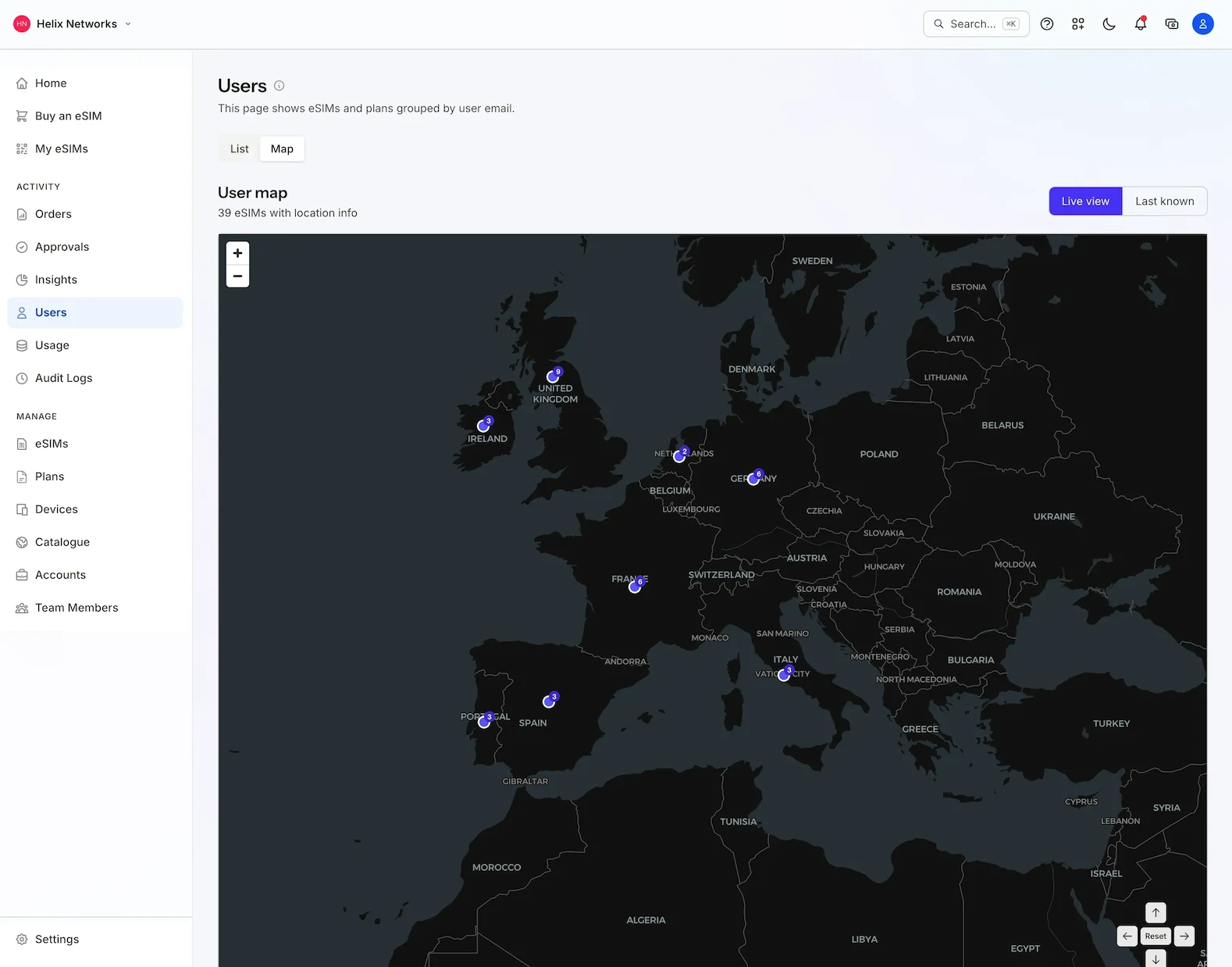
The defining problem isn't that staff travel from home. It's that the organisation operates in many countries at once, with people distributed and mobile across them. An emergency team might deploy for six weeks after a flood, then stand down. A logistics officer covers three country offices in a single quarter. New local staff start every month, and consultants arrive for an evaluation and leave again. Devices change hands. There is no single office network to fall back on, and the people who most need to stay reachable are often the hardest to reach.
Four costs add up, and most of them never show up in the mobile budget.
Cost 01
Buying data country by country, unmanaged
Getting data in every country a team works in is expensive and, more to the point, unmanaged. Where there's no managed connectivity in place, staff buy a local SIM, top up with whatever credit they can find, or lean on an office or hotel connection that drops. Each of these is a small decision made under pressure, and none of them are visible to the people responsible for the budget.
The organisation is paying for connectivity in a dozen uncoordinated ways. Nobody can say what a country programme actually spends to stay online, because the spend is scattered across receipts, personal SIMs, and roaming charges that surface weeks later.
Cost 02
Expense processing instead of automation
Every local SIM and top-up becomes an expense claim. Someone photographs a receipt, files it, and a finance officer reviews it against policy, often in a different currency, often months later when the context is gone. The dollar amount is small. The processing effort is not, and it repeats for every person in every country.
When connectivity is provisioned centrally instead, that whole category disappears. There is no receipt to chase, because there was no out-of-pocket purchase. The cost of processing a claim often rivals the claim itself; automating the connectivity removes both.
Cost 03
The single-supplier trap
Committing to one carrier looks like a way to control cost: a single contract, a single rate card. In practice it does the opposite. No carrier is strong everywhere, so wherever its coverage is weak you end up paying twice: once for the contract, and again for the local SIMs, top-ups and roaming surcharges staff buy to fill the gap. You are funding a supplier's blind spots out of the programme budget.
eSIM Copilot takes that complexity off your hands. Instead of tying you to one carrier, we work across many network suppliers and use whichever gives the best price and quality for each country or district. You don't manage the contracts, rate cards or coverage maps, we do that for you. You get one account, one dashboard and one support line, with the right network behind every country and no premium roaming charges.
Cost 04
No audit trail
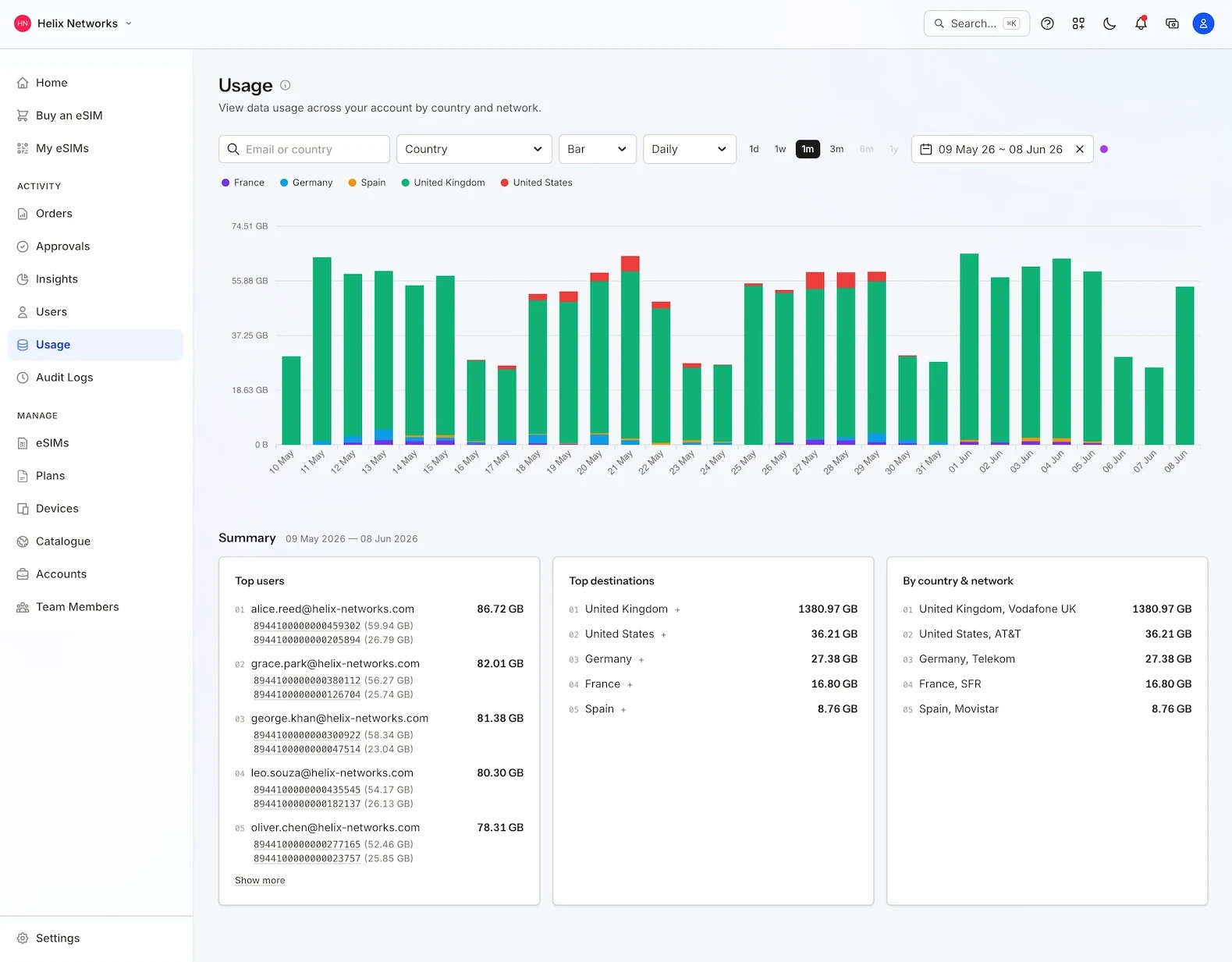
Donors and boards ask for clean reporting, and rightly so. When mobile spend is scattered across personal SIMs, roaming surcharges and reimbursed receipts, even a well-run finance team can only estimate what a programme actually spent to stay connected, because the data was never captured in one place.
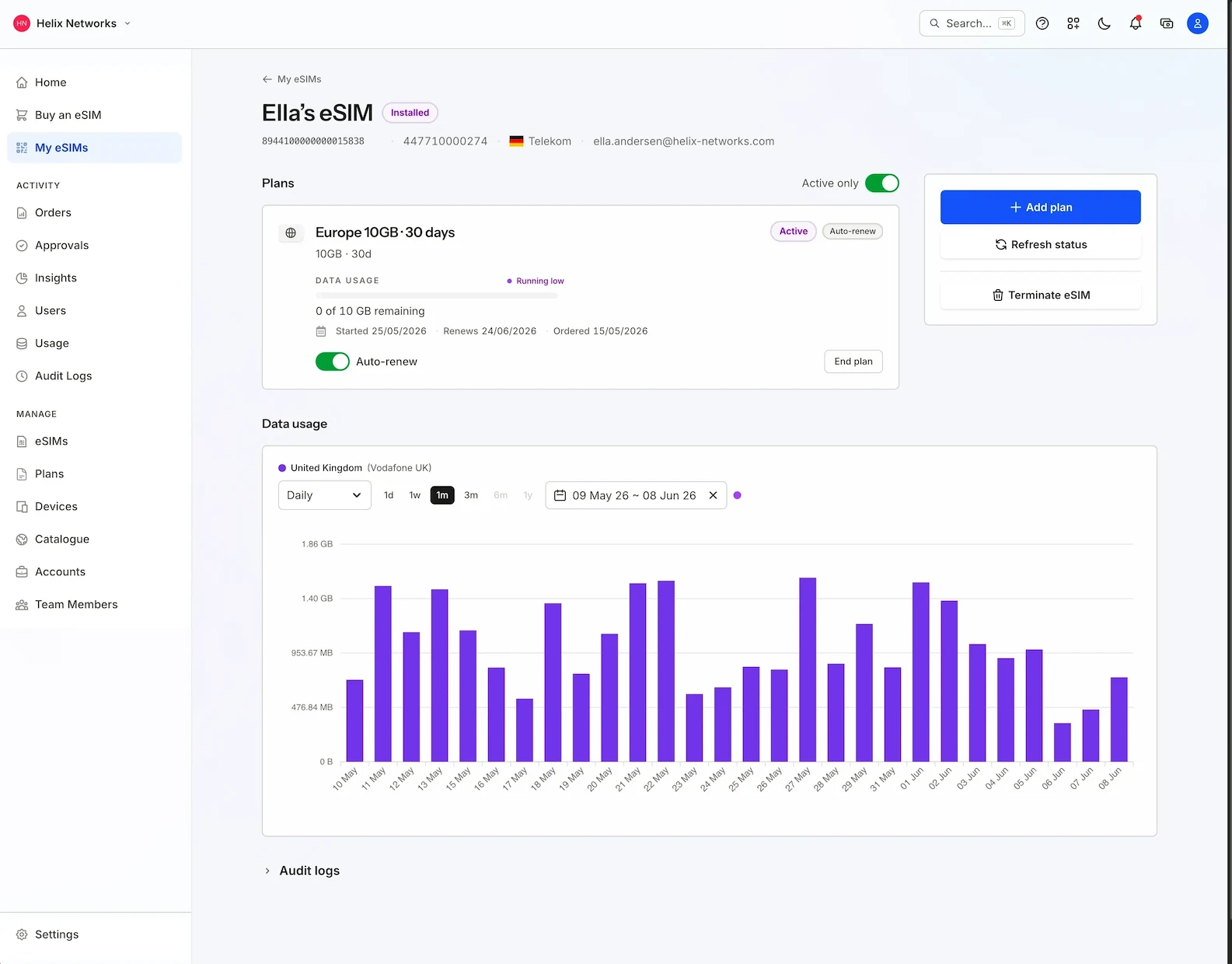
With managed eSIMs, usage and spend sit in one place, attributed by device, plan, person, and country. You can answer the question with a number instead of an estimate, which matters for grant reporting, audits, and the next budget cycle.
The solution: one managed view of every connection
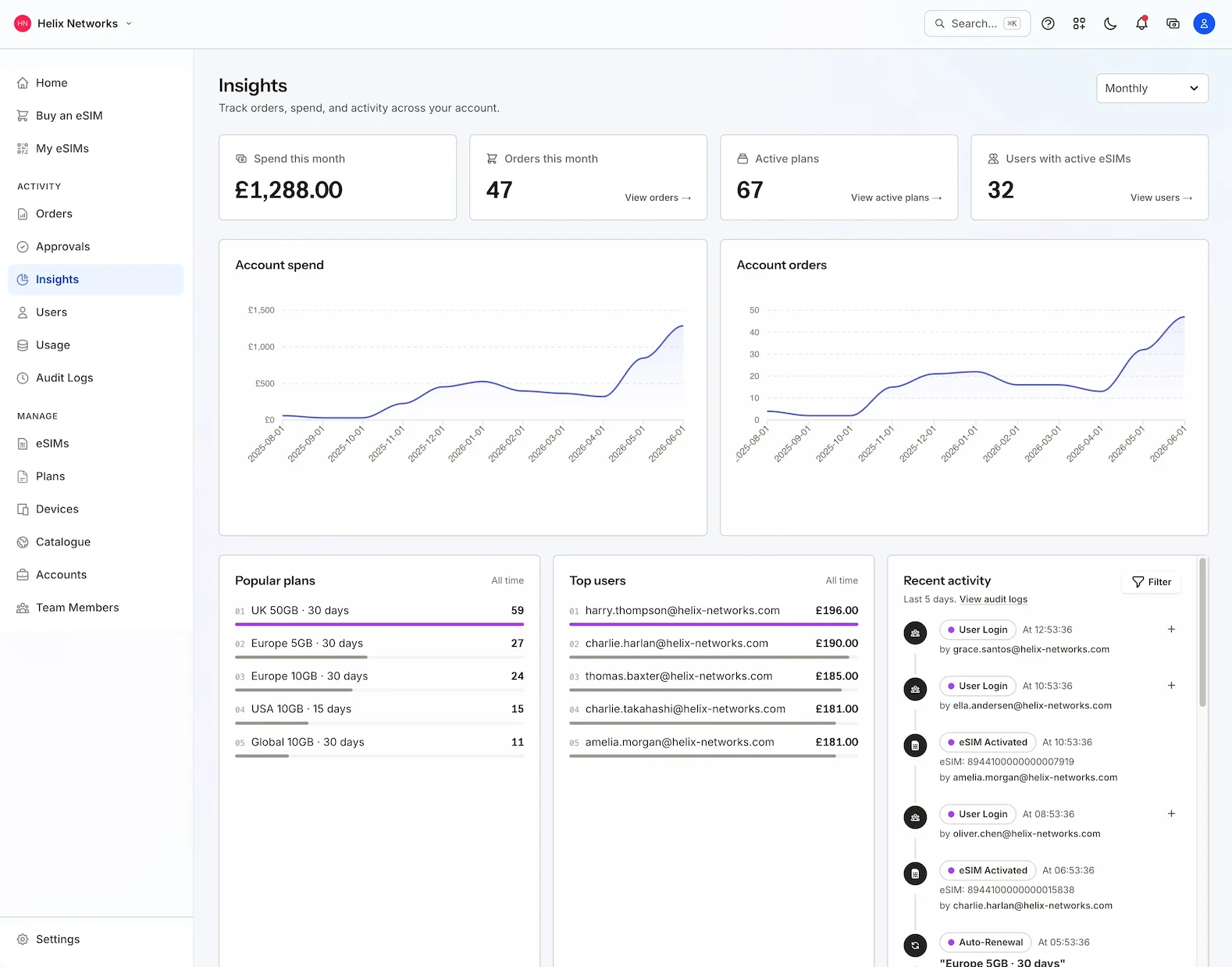
The fix isn't another carrier contract. It's treating connectivity as something the organisation provisions and sees centrally, the way it already manages vehicles, devices and grant budgets. One account draws on many networks, every connected device sits in the same dashboard, and the support team owns the connection end to end so field staff don't have to. The rest of this section is what that looks like in practice for a distributed NGO.
What field teams carry
Field connectivity is not just phones. A clinic runs a tablet for case records. A vehicle or a temporary office runs a connected router so a whole team shares one link. A coordinator carries a phone that has to work the moment they arrive on site.
Phones
Staff and coordinators reachable the moment they arrive, on a network chosen for that country.
Tablets
Clinics, surveys, and field data tools that need data but not a voice line.
Connected routers
A vehicle, a pop-up office, or a remote site sharing one managed connection across a team.
The point is that one platform covers all three. The IT or operations lead doesn't run a separate process for tablets and routers; every connected device sits in the same dashboard with the same reporting and the same support.
Self-service for staff, control for the organisation
Field staff shouldn't have to email HQ and wait for IT to set up a SIM. With eSIM Copilot they order and manage their own connectivity from a mobile app, or straight from the tools your organisation already runs on, like Microsoft Teams, Slack and WhatsApp, plus other integrations. A coordinator can sort their own data plan for a new posting without a ticket or a phone call.
Operations and finance keep the controls. Admins decide who can order, set spend limits and approvals, assign plans and budgets by programme, and see spend from one dashboard. Staff get the speed of self-service; the organisation keeps the oversight and the audit trail.
 Teams
Teams Slack
Slack WhatsApp
Staff self-service
Order and manage data from a mobile app, or from Microsoft Teams, Slack and WhatsApp, the tools staff already use. No IT ticket, no waiting.
Admin control
Set who can order, add spend limits and approvals, assign budgets by programme, and keep every device and eSIM in one dashboard.
Setting up a new office or country project: before and after
Here is a composite of what we hear before and after teams switch. The details are invented; the pattern is not.
Before
- A team sets up a new office or project. No managed connectivity is in place.
- Staff buy local SIMs, pay cash, keep the receipts.
- People lose the first day finding SIMs and working top-ups instead of working.
- SIMs and top-ups get filed as expenses weeks later.
- Finance reconciles receipts in three currencies. No one can total the programme’s real mobile spend.
With eSIM Copilot
- eSIMs issued centrally up front, on the networks that perform in that country.
- Devices connect straight away. No local-SIM run, no cash, no receipt.
- If anything misbehaves, the 24x7x365 team handles it, in their time zone.
- Usage and cost appear in one dashboard, attributed to the person and the programme.
- Finance sees one clean number per programme, ready for the grant report.
See it with your own programmes
Create a free account and add a few staff, or book a demo and we'll walk through it with the countries you work in and your devices.
Support
24x7x365, in the field's time zone
Field staff don't have connectivity problems during office hours. They have them at 3am local time, on a weekend, in a place where being offline is a real problem. A support team that is always on, and that owns the connection end to end rather than pointing at an underlying carrier, is the difference between a resolved issue and a coordinator stranded without comms. One queue, one owner, any hour.
Pricing
No minimum spend. No annual fee. Pay for what you use.
Activity for an NGO is uneven. A response surges, then quiets. A programme closes; another opens. Locking that into a minimum commitment or an annual licence wastes restricted funds in the quiet months and constrains the busy ones.
eSIM Copilot has no minimum spend, no annual fee, and no per-seat licence. You pay only for the data your devices actually use. Spend rises with a deployment and falls when it ends, which is exactly how the rest of an NGO's costs already behave.
No minimum spend, no annual fee
You only pay for the data you use, so it costs nothing to start. Create an account, or book a demo to see the per-programme picture first.
The long-term impact
Managed connectivity is not only an operational tidy-up. Over a few budget cycles it changes what an NGO can prove to its donors, protect for its staff, and afford for its mission.
More money reaches the mission
Money that leaked into local SIMs, roaming surcharges and expense admin goes back to programmes and your mission, not overheads.
Donor trust, earned with numbers
Clean spend attributed by programme makes grant reports and audits straightforward, which makes the next round of funding easier to win.
Duty of care you can stand behind
Staff stay reachable wherever they work, from day one. Keeping field teams connected is a safeguarding and governance matter, not just IT.
It scales with the mission
A new emergency response or country programme spins up on the networks that work there, with no carrier contract to renegotiate and nothing wasted when it winds down.
Where this matters most
The case is strongest for organisations whose work is genuinely distributed: staff across many countries, frequent rotations and short-term roles, remote locations where one carrier won't do, and a reporting obligation to donors that demands a clean spend number. More on the team side on eSIM for business, and if your tools should provision connectivity directly, eSIM for apps is the embedded version.
Common questions
Does this cover tablets and routers, or just phones?
All of them. Phones, tablets, and connected routers for vehicles or pop-up sites all live in the same account with the same reporting and the same support. Any connected device that takes an eSIM can be managed centrally, and we can support physical SIMs too where a device needs one.
How long does it take to set up an account?
About ten minutes to create an account and get going. We support single sign-on (SSO), so staff simply log in with your existing identity provider, with no separate accounts to create or passwords to manage.
What plan types do you support?
One-off plans, monthly recurring plans, and day-passes (charged by the day, where staff don't have to do anything, it just works whenever they use data). Staff install the eSIM once and reuse it forever, topping up or switching plans on the same profile rather than installing a new one each time.
Can staff sort their own connectivity, or does it all go through admin?
Staff can self-serve. They order and manage their own eSIMs from a mobile app or from Microsoft Teams, Slack and WhatsApp, so a coordinator can sort a data plan for a new posting without a ticket. Admins keep control through the app: who can order, spend limits, approvals, budgets by programme, and full visibility of every device and all spend.
What does the reporting actually give finance?
Usage and spend in one place, attributed by device, plan, person, and country. That turns "roughly this much, somewhere" into a clean per-programme number you can put in a grant report or an audit.
Is there a commitment to get started?
No. No minimum spend, no annual fee, no per-seat licence. You pay only for the data your devices use, so cost tracks activity rather than a contract.
Talk to us about your field operation
One managed view of your field operation
Tell us where your teams work and what they carry. We'll show you the per-programme spend picture, the supplier mix for the countries you work in, and how support works for staff in the field.
This case study is a composite drawn from patterns we see across distributed, field-based organisations, not a single named deployment. Last verified June 2026.